
Today the Friends of the Benson Trolleys is embarking on a new chapter. In 2024 we officially tool ownership of the historic waterfront streetcars and are now working with the City of Seattle and a coalition of local business and industrial leaders to bring them to Ballard in hopes of putting them back into use on the 1.4-mile corridor along Shilshole Avenue Northwest, connecting Ballard's commercial core to the Chittenden Locks, the Nordic Museum, and Ballard Blocks. Funds donated today will be put directly toward storage and feasibility work and are critical to ensure a future for these historic cars in Seattle. Friends of the Benson Trolleys is a 501(c)3 charitable nonprofit. Donations can be made by clicking the button below!
To learn more about the project and meet some of our team members, please check-out our short 2018 Kickstarter video here:
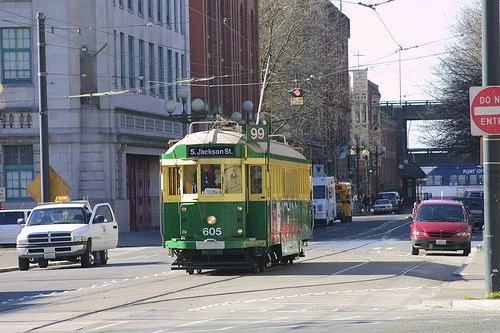

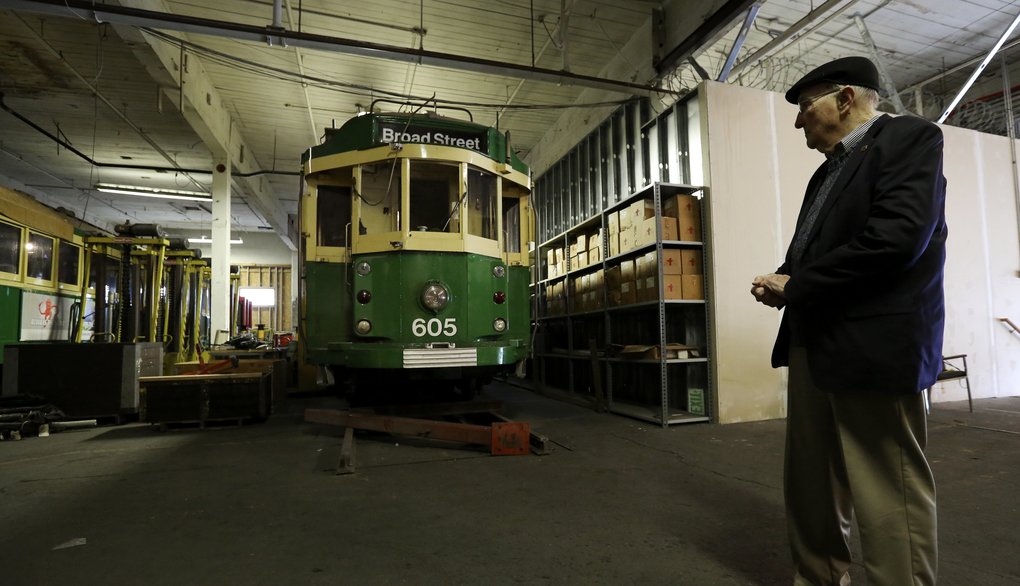
In 2006, Seattle’s historic waterfront streetcars (the Benson Trolleys) were taken out of service temporarily to accommodate the construction of the Olympic Sculpture Park. In the years that followed, their facility wasn’t relocated, so they remained in storage--effectively pausing their decades-long tenure of these nearly-100-year-old streetcars on Seattle’s waterfront.
In 2014 a group of private citizens came together to launch the Friends of the Benson Trolleys (FOBT) to preserve, restore and re-integrate the cars back into service. As a part of this work, FOBT worked with King County and the City of Seattle to retain two of these historic streetcars in Seattle. Then in 2018, FOBT launched a successful Kickstarter and private fundraising campaign, raising nearly $50,000 to fund the first phase of this effort, a feasibility study to evaluate the condition of the cars and to estimate the feasibility for their reintegration into the modern-day streetcar system in Seattle. We can't thank our supporters and backers enough! It's fellow transportation nerds, Seattle history buffs and civic champions like you who make this kind of grass-roots effort possible.
Our first step was to get down to the brass tacks of how such an integration would be designed, which is why we engaged Historic Railway Restoration, Inc. to evaluate how these cars will be powered on the new streetcar line and the means by which the voltages in the existing overhead catenary systems can be reduced sufficiently to provide power to the vintage cars.
The study found that the cars, having been so well cared for by the County, were in pristine operating condition, and that it was indeed quite feasible to integrate the cars onto a current system. In fact, other cities like San Francisco and New Orleans have had great success with their vintage fleets. Now that we have this information, it allows us to plan for the next phases of investment in these historic streetcars to prepare them for their next century of operation.

In a major step forward, the Friends of the Benson Trolleys acquired Seattle’s two remaining historic waterfront streetcars from King County in 2024. And in 2025, the Seattle City Council approved funding to relocate these streetcars from storage in Anacortes to Ballard—where people can see them, touch them, and start to picture them rolling through the city again.
A coalition of local business and industrial leaders, anchored by real estate developer Ned Carner, has rallied around the idea of bringing these trolleys to the 1.4-mile corridor along Shilshole Avenue Northwest, connecting Ballard's commercial core to the Chittenden Locks, the Nordic Museum, and Ballard Blocks. There is still real work ahead — track upgrades, a power solution, and a new operating agreement with the city.

When St Louis came shopping for Seattle’s vintage streetcar fleet in 2015, a group of civic leaders decided we could not afford to let this living history of our city slip away. This group, under the leadership of Tom Gibbs founded the Friends of the Benson Trolleys, a 501c3, to successfully advocate for saving two of the vintage Benson trolleys with the vision that they should be placed in service connecting the Chinatown-International District, Pioneer Square, the Market and MOHAI.
Don Blakeney
Don leads the University District Partnership, a 501(c)3 nonprofit and Business Improvement Area that works to foster and sustain a vibrant, diverse, and healthy University District in north Seattle. Before working in the University District, Don led economic development and center city transportation planning efforts for the Downtown Seattle Association. Don has been a rail enthusiast since childhood, when he used to build elaborate train sets with his brother. The great-great grandson of one of Seattle's first rail contractors, Don developed his appreciation for restoring vehicles and history at a young age, spending time with his uncle in North Seattle working on classic cars. Don graduated from Whitman College and later studied urban planning and public administration in New York at Columbia University. Returning to Seattle, Don served as the Executive Director of the Chinatown-ID Business Improvement Area for five years, where he met his fellow board members and first became passionate about restoring the Benson cars.
Ben Franz
Ben is a Partner with Shiels Obletz Johnsen (SOJ) a project management consultancy firm in Seattle and Portland. Ben joined SOJ in 2017 after fifteen years leading two iconic historic destinations through major capital projects and community revitalization efforts. As Executive Director of the Pike Place Market, Ben led the successful campaign to renovate Seattle’s historic Market and develop the new MarketFront Project through successful completion. As Executive Director of the Santa Monica Pier Restoration Corporation Ben guided multi-phased infrastructure upgrades including the renovation of the Historic Looff Hippodrome. Ben grew up in Pullman, Washington and graduated from the University of Washington with a BFA in Sculpture. After a decade in California he and his wife returned to their roots in Seattle with their two children. Obsessed with bicycles since the 3rd grade, Ben still rides nearly every day. He also enjoys chasing waves on the coasts of Washington and Oregon and can be found snowboarding when the Pacific NW slopes turn to waves of snow.
John Cox
Born and raised in Denver, John rode his first streetcar at the age of 6 months. His father spent his career working for the Denver Tramway, where John would later intern while he the University of Southern Colorado to study history and pre-law. John went on to have a 40-year career as a machinist locomotive engineer with Burlington Northern. The last decade of his tenure was spent running Sounder commuter trains here in the Pacific Northwest. John is a lifelong rail enthusiast and has also served as an engineman and machinery technician with US Coast Guard.
Tomio Moriguchi
Tomio led Uwajimaya, Seattle's premiere Asian grocery store for over four decades in Seattle's Chinatown-International District. Born in Tacoma in 1936, Tomio was interned with his family at a young age during World War II at Tule Lake, California. Tomio graduated from the University of Washington with a BS in Mechanical Engineering. He worked briefly for Boeing before returning to the family business after the passing of his father in 1962. Tomio grew Uwajimaya from a “ma and pa” Japanese grocery store into a regional leader in retailing Asian foods and culture. In 1992, Tomio was named Nisei of the Biennium by the National Japanese American Citizens League. In 2005, Tomio received an award from the Emperor of Japan for his contributions to Japan and USA relations. Tomio is an active business leader. He has served as a Director on the Boards of Seafirst National Bank (Bank of America), Puget Sound Energy, Federal Reserve Bank of San Francisco, Seattle Chamber of Commerce, Japan America Society and other organizations promoting business and international relations. Currently, Tomio is owner/publisher of a Japanese language newspaper in Seattle. Tomio lives in Seattle with his wife, Jenny Li Moriguchi. He has two children and four grandchildren.
Matthew Thormodson
Matthew is a Ballard resident and transportation enthusiast. He joined the Friends of the Benson Trolleys in 2026.
Tom Gibbs (in memory and spirit)
A streetcar enthusiast since childhood, Tom was a strong supporter of George Benson’s original efforts to create the Waterfront Trolley line in the 1970s. Tom led an effort in the mid-2000s to re-activate the line after it was closed-down but the plans for the new waterfront park didn’t provide for a streetcar line. Tom wanted to preserve the legacy George Benson left for us, although, Tom has a few legacies of his own. He led the creation of Metro Transit in the early 1970s and managed Metro’s restoration of Lake Washington and the clean-up of Elliot Bay and our Puget Sound beaches in the 60’s. As a founding member of the Public Facilities District’s Board, was also instrumental in the design and construction of SAFECO Field in the late 90’s. Tom passed away in 2019 from complications related to cancer and is missed by us all. His enthusiasm for these cars and George’s legacy has fueled this project from the beginning and his leadership continues to inspire and guide us as we carry this project forward.